Current El Niño Longitude Index (ELI) = 188.8 - Date: 2026-09-03
Every El Niño event is different and also its impacts
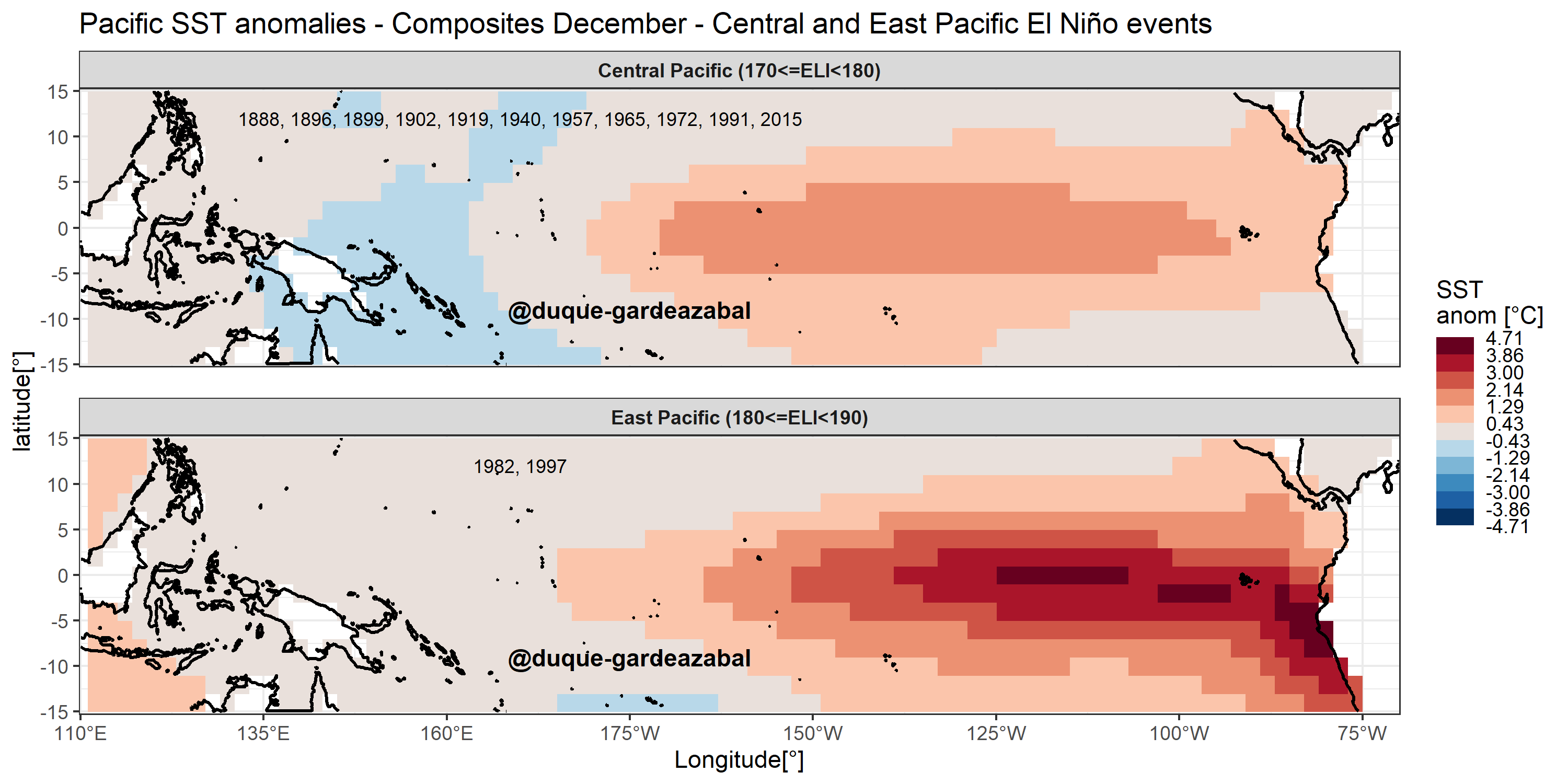
Figure 1:Sea surface temperature composites for two categories of El Niño - Southern Oscillation.
Depending on ocean-atmospheric variables in the Pacific, the atmosphere reacts differently to the position of the Sea Surface Temperature (SST) anomalies. This imply different impacts on the worlds climate, i.e. the teleconnections, depending on how much SSTs are over the convection thershold and their location (Williams & Patricola (2018)). Then ENSO events can be classified as Central or East Pacific events (Figure 1)
How differently do they evolve? It depends on pressure difference over the Pacific (Figure 3).
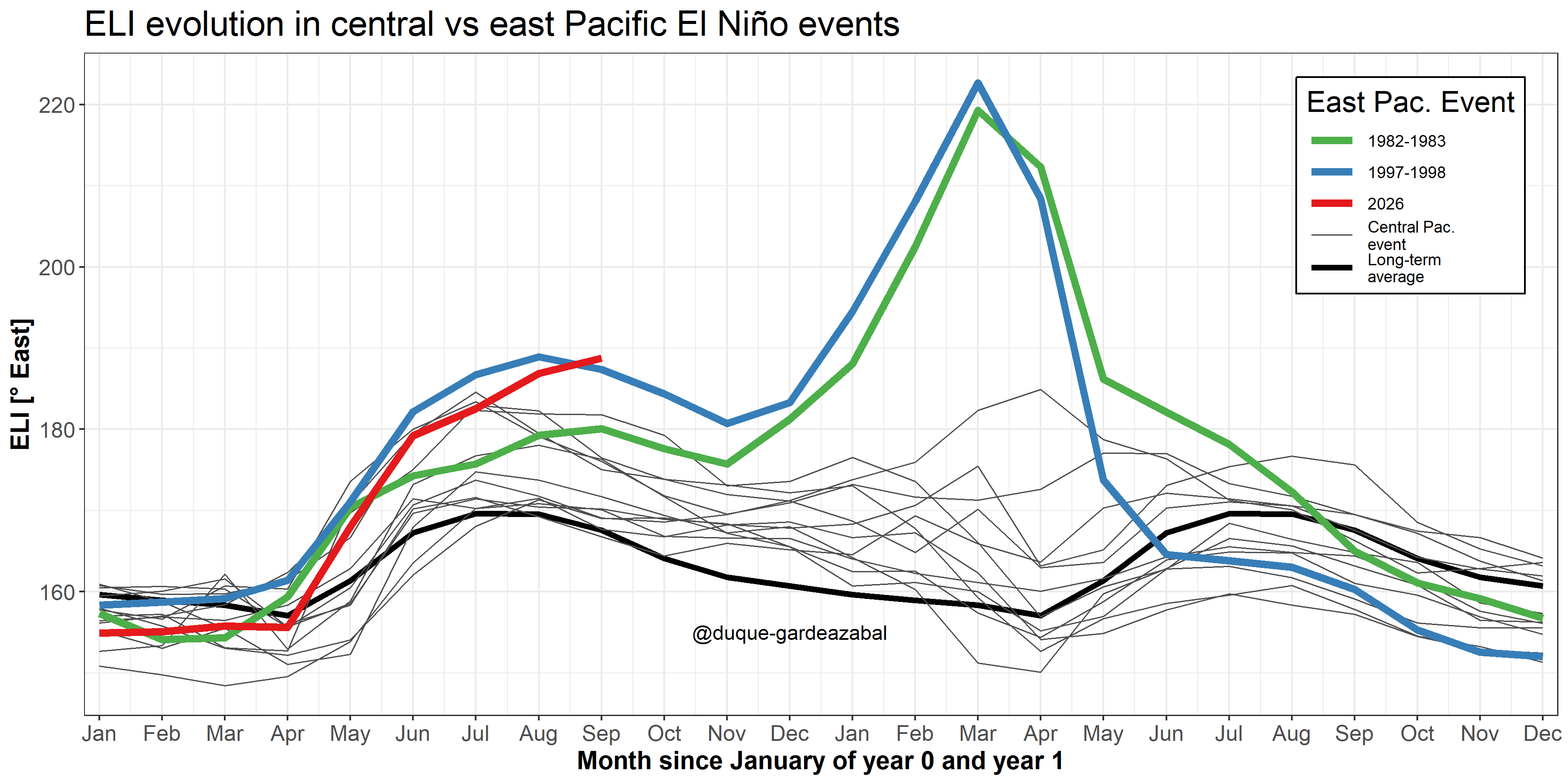
Figure 2:El Niño Longitude Index evolution for the year of formation and decay of an El Niño event, classified by East and Central Pacific events compared to the multiannual mean.
Changes in pressure control winds
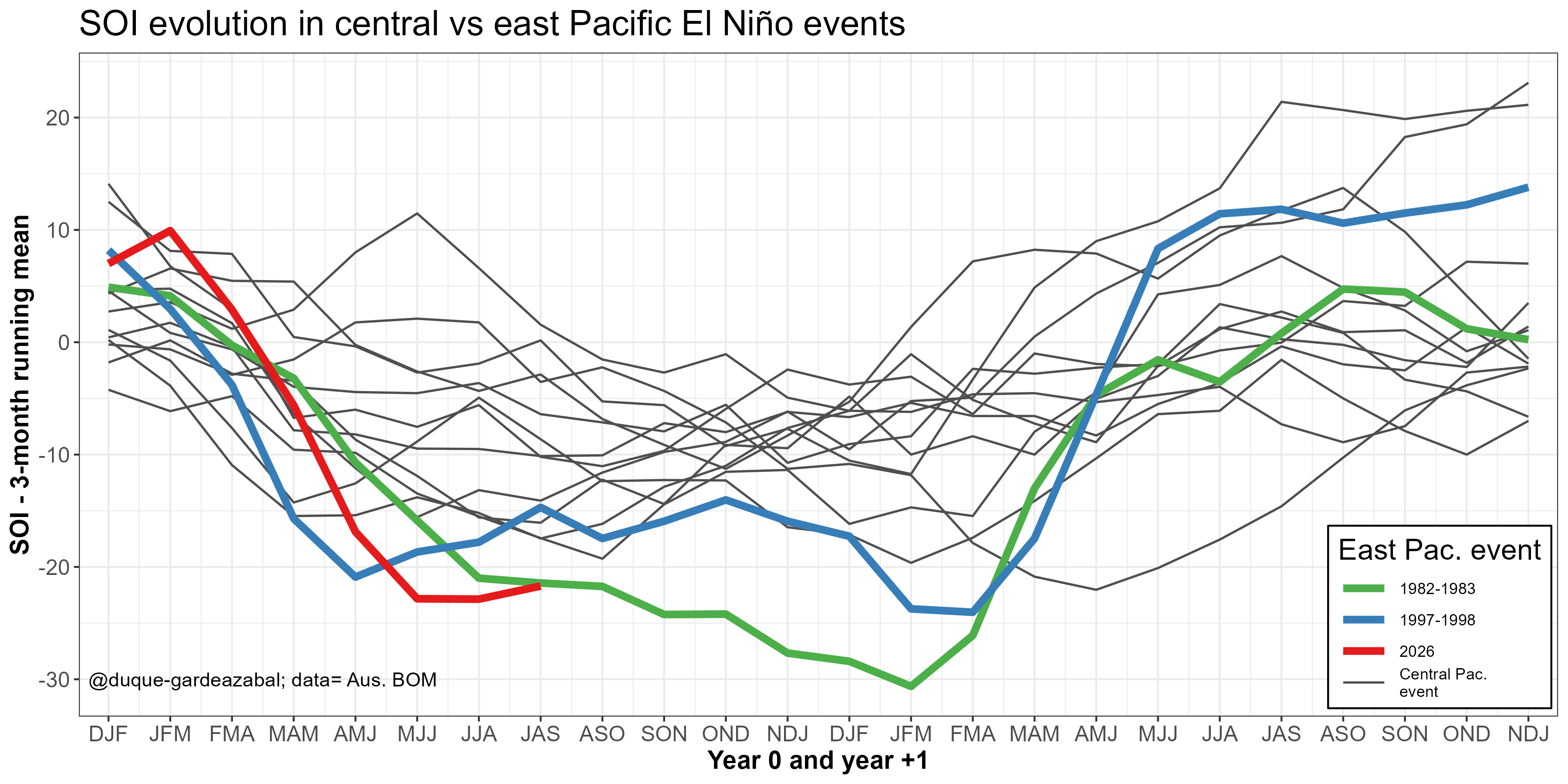
Figure 3:Diversity of the differential pressure between Tahiti and Darwin (Southern Oscillation Index - SOI) for East and Central Pacific ENSO eventos.
We know the evolution towards one kind of ENSO event is probably related to the occurrence of Westerly wind events, which are controlled by changes in atmospheric pressure (influenced by the SST). The SOI – a pressure-based index – gives us some clues on how these strong east events evolve (Figure 3). The SOI was consistently low in the two East Pacific events (during year 0 and beginning of year+1), compared to central Pacific events. 2026 is following a similar track, but it must remain low.
Global teleconnetions and the impacts change depending on the kind of event
Some research has look at how teleconnections to North America and Europe depend on the position of alterated convection in the tropical Pacific (Patricola et al. (2019)), few have look to the connection to Europe and its effects on tropical cyclones. The differneces in the influence to South America was studied but not explicitly with the logitudinal position of the SSTs anomalies and the threshold for convection (Figure 4; Cai et al. (2020)).
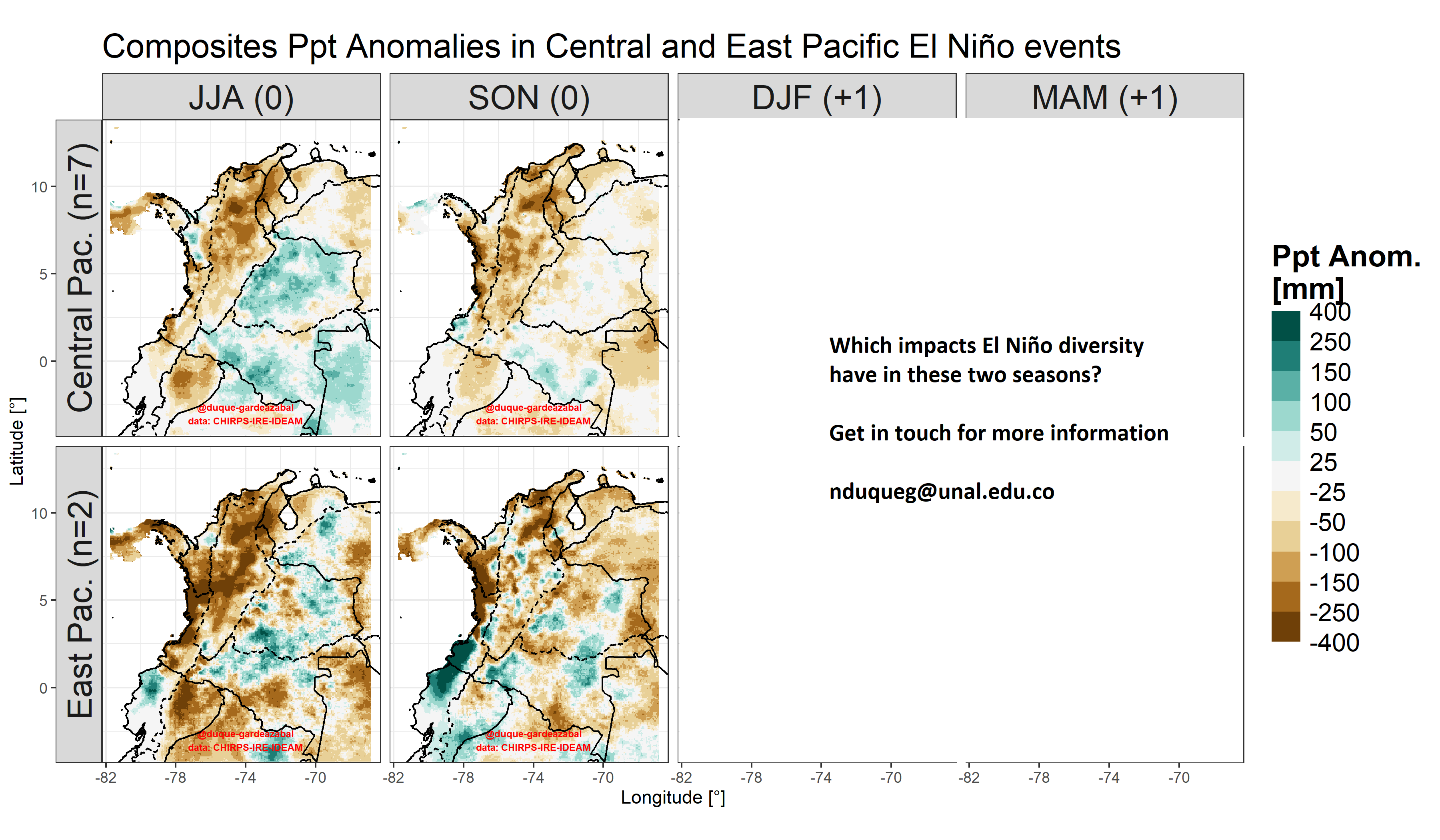
Figure 4:Impacts of ENSO diversity in Northern South America’s precipitation for East Pacific and Central Pacific ENSO events depending on the season.
- Williams, I. N., & Patricola, C. M. (2018). Diversity of ENSO Events Unified by Convective Threshold Sea Surface Temperature: A Nonlinear ENSO Index. Geophysical Research Letters, 45(17), 9236–9244. 10.1029/2018gl079203
- Patricola, C. M., O’Brien, J. P., Risser, M. D., Rhoades, A. M., O’Brien, T. A., Ullrich, P. A., Stone, D. A., & Collins, W. D. (2019). Maximizing ENSO as a source of western US hydroclimate predictability. Climate Dynamics, 54(1–2), 351–372. 10.1007/s00382-019-05004-8
- Cai, W., McPhaden, M. J., Grimm, A. M., Rodrigues, R. R., Taschetto, A. S., Garreaud, R. D., Dewitte, B., Poveda, G., Ham, Y.-G., Santoso, A., Ng, B., Anderson, W., Wang, G., Geng, T., Jo, H.-S., Marengo, J. A., Alves, L. M., Osman, M., Li, S., … Vera, C. (2020). Climate impacts of the El Niño–Southern Oscillation on South America. Nature Reviews Earth & Environment, 1(4), 215–231. 10.1038/s43017-020-0040-3